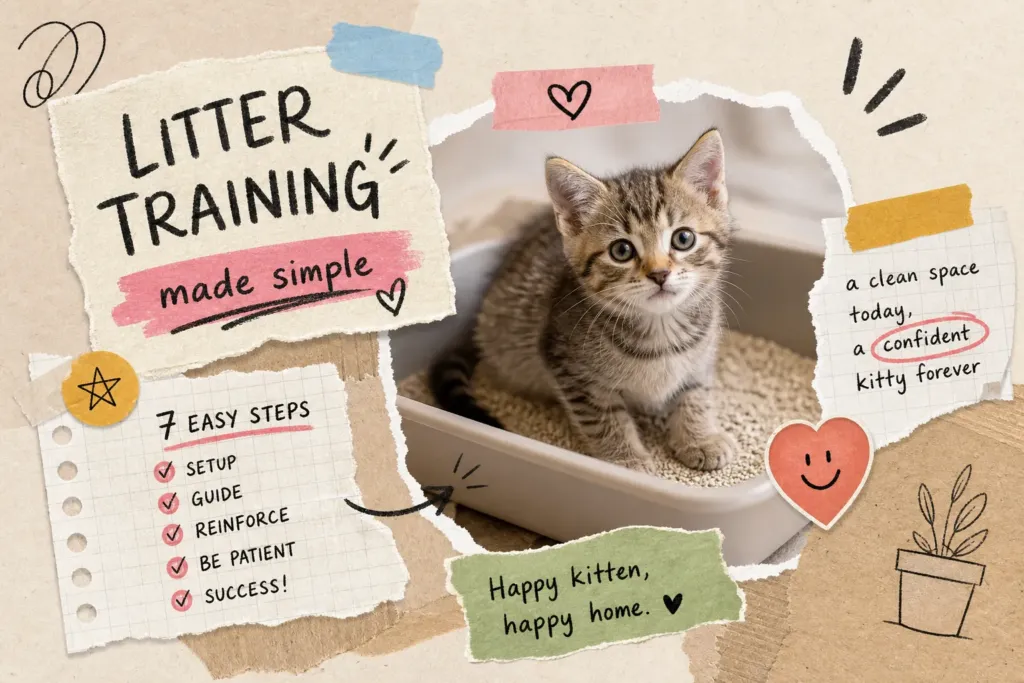
Many new kitten owners assume litter training is automatic. The kitten arrives home, discovers the box on its own, and that’s the end of it. Then they find a puddle behind the couch at midnight and wonder what went wrong. The truth is that even a well-started kitten needs the right environment to succeed, and “the right environment” is something you have to build intentionally. Knowing how to litter train your kitten from day one makes that process far less stressful for both of you.
At Kitty Palace Cattery, our kittens are introduced to litter boxes as part of their early socialization, starting around 3, 4 weeks old. By the time they leave for their new homes, they already have a foundation. But your home is a completely new space with new smells, new sounds, and new routines. That foundation needs reinforcement, and the setup you provide in those first weeks makes all the difference.
This guide walks you through everything you need: choosing the right box and litter, building a consistent training routine, fixing the most common problems, and recognizing the signs that point to a vet visit instead of a troubleshooting checklist. Many kittens learn within days when conditions are right, though some may take a little longer, and that’s completely normal.
1. When to start and what “ready” actually looks like
Breeders typically introduce litter boxes at 3, 4 weeks old, right when kittens begin eliminating independently and start weaning from their mother. By the time most kittens are ready to go to new homes at 10, 12 weeks, they’ve already had weeks of exposure. If the breeder has provided early socialization, your kitten likely doesn’t need to learn what a litter box is. They need to learn where yours is.
The practical starting point for any adopter is day one. Don’t wait to see if your kitten figures it out. The moment they arrive home, show them the box. If they can eat solid food, move around on their own, and attempt to go independently, they’re ready. The behavioral signs to watch for include wandering away from their sleep spot before eliminating, sniffing and crouching on the floor, digging at soft materials like blankets, and showing general curiosity and independence. These are all signals that the kitten’s instincts are already pointing in the right direction.
2. How to Litter Train Your Kitten: Litter Box Setup
This is the step most owners either skip or underthink, and it’s often why litter box training for kittens stalls. The box itself, how many boxes you have, and where they’re placed all directly affect whether your kitten uses them consistently.
Choosing the right size and style
Start with an open-top, low-sided tray. Skip top-entry boxes and covered designs for now. Both are harder for small kittens to navigate and can feel intimidating in a new home. The entry height should sit between 2.5 and 5 inches so your kitten can step in without strain. A starting size of around 12×12 to 15×9 inches gives the kitten enough room to turn around and dig without feeling like an open field. Liners can cause problems for some kittens and are often best avoided during early training, as the texture may discourage use.
How many boxes your home actually needs
The standard rule is one box per cat, plus one extra. In a one-kitten household, that means two boxes at minimum. Place them far enough apart that they feel like separate options, not one combined zone. During early training, never make your kitten travel a long distance or navigate stairs to reach a box. Accidents near sleep spots are almost always a distance problem, not a behavior problem.
Where to place each box for maximum acceptance
Quiet, low-traffic rooms work best. Keep boxes away from food and water bowls, loud appliances, and areas with heavy foot traffic. In a multi-level home, place at least one box on each floor your kitten uses daily. Access needs to be available at all hours, including overnight, with no doors that accidentally block the way.
3. What is the best litter for kittens?
Litter texture and formula affect two things simultaneously: whether your kitten steps in willingly, and whether it’s safe if they mouth or accidentally ingest a small amount while exploring. Both matter equally in the first weeks.
Litter types that work well for kittens
Unscented paper pellets are the top recommendation for young kittens. They’re soft on paws, low-dust, and safe in small accidental ingestions, which matters when curious kittens are still learning to groom. Pine or wood pellets are a close second: natural, low-dust, and widely accepted by young kittens. Non-clumping clay is a traditional option with larger granules and lower ingestion risk. Corn, grass, wheat, or tofu-based litters can also work well if they’re unscented and low-dust, though acceptance varies by kitten.
What to skip until your kitten is older
Clumping clay litter is the main one to avoid for kittens under 8, 12 weeks. The active ingredient, sodium bentonite, swells when wet. If a kitten ingests it, even in small amounts, it can form a mass in their digestive tract and cause a dangerous blockage. Avoid scented litters regardless of formula; kittens are more sensitive to fragrances and dust, which can cause respiratory or aversive reactions. Silica or crystal litters should also wait until your kitten is a few months older. The two non-negotiables across every formula are unscented and low-dust.
4. The training routine that gets consistent results
Timing, placement, and reinforcement are what separate a kitten that catches on in three days from one that takes three weeks. The routine itself is simple. The key is applying it without gaps.
When to place your kitten in the box
Place them in the box immediately after meals, after naps, and after active play sessions. Those are the three highest-probability moments for elimination. Set them in gently rather than dropping or rushing them. Let them sniff the litter first; you can make a light scratching motion in the litter to demonstrate the purpose without forcing anything. In the first week, actively bring them to the box several times per day, especially when you notice sniffing, crouching, or scratching behavior.
How to reinforce good behavior without punishment
Reward immediately after they exit the box with quiet verbal praise, a tiny treat, or both. The association needs to happen right after they finish, not several minutes later when you’ve moved to another room. Never scold, startle, or punish for accidents. Fear slows training significantly and creates lasting avoidance. When accidents happen, clean the spot thoroughly with an enzymatic cleaner so the scent doesn’t signal that location as a bathroom in the future.
Staying consistent in the early weeks
Confine your kitten to a smaller, supervised area during early training: one room with the box, food, water, and bed within easy reach. Expand their access gradually as they demonstrate consistent box use in that space. The single most important variable in the entire process is consistency, same routine, same box location, same litter. Disrupting any one of those three things is the most common cause of unexpected setbacks.
5. Troubleshooting when litter training your kitten hits a snag
Most litter box problems fall into a small number of categories. Work through them systematically before assuming the issue is purely behavioral.
Cleanliness and location problems
A dirty box is the most common reason kittens stop using it. Scoop at least once daily; twice daily is better for young, active kittens. Do a full wash with mild soap and water once a week, then refill with fresh litter. If the box is positioned near food or water, or in a noisy high-traffic area, move it somewhere quieter. Boxes that are too far away, especially at night, lead to accidents close to where the kitten sleeps. Reposition rather than retrain.
Litter aversion and stress-triggered avoidance
Sudden litter changes cause many kittens to reject the box entirely. Always transition gradually by mixing old litter with new over 7, 10 days. Heavily scented litters, coarse textures, or rough and unfamiliar materials at the box entrance can discourage use even in a well-trained kitten.
Environmental stress from a new pet, a new household member, a move, or major schedule changes commonly triggers avoidance in kittens that were previously reliable. Reduce the stressor where possible, re-establish the routine, and consider a pheromone diffuser like Feliway if avoidance persists without a clear physical cause. Address one variable at a time so you can identify what actually fixed the issue.
6. When litter box problems need a vet, not troubleshooting
Not every litter box issue has an environmental or behavioral solution. Some require prompt veterinary attention, and waiting makes the situation significantly worse.
Contact your vet without delay if you notice any of the following:
- Straining to urinate or defecate, especially with repeated attempts and little or no output
- Crying in or near the litter box
- Blood in urine or stool
- A sudden and dramatic change in litter box habits with no environmental trigger
- Urinating outside the box combined with excessive thirst, lethargy, or a swollen belly
These signs can indicate a UTI, urinary inflammation, intestinal obstruction (including from litter ingestion), constipation, or kidney problems. A kitten that is straining but producing no urine is a medical emergency. Rule out physical causes first whenever the change is sudden or your kitten seems uncomfortable. Fixing the environment can wait; a blocked kitten cannot.
You’re already ahead of most new owners
The framework is straightforward: the right box setup, a safe litter, consistent timing around meals and naps, and calm reinforcement after every success. Many kittens pick this up faster than their owners expect when those conditions are in place. The problems that drag on are almost always traced back to one skipped step, usually in setup or cleanliness.
Kittens from Kitty Palace Cattery come home with a real head start. Early litter box introduction is part of our standard socialization process, so your kitten already knows what a litter box is and what it’s for. Your job is to make yours easy to find, clean to use, and comfortable to return to. That foundation is already built.
Follow the steps above to litter train your kitten and stay consistent through the first two weeks. The hard part is already done, and now you have the full roadmap to back it up.
FAQ
Start the moment your kitten arrives home—don’t wait to see if they figure it out on their own. Breeders typically introduce boxes at about 3 to 4 weeks, and most kittens have had exposure by the time they go to new homes at 10 to 12 weeks. If your kitten can eat solid food and move independently, they’re ready to begin.
Show the kitten the box as soon as they arrive and place it near their sleep or activity area so it’s easy to find. Encourage exploration by gently placing them in the box if they sniff or crouch, and keep visits frequent until they start using it consistently. Early, calm exposure reinforces the foundation many breeders provide.
Use an open-top, low-sided tray with an entry height of about 2.5 to 5 inches so the kitten can step in easily. A starting size around 12×12 to 15×9 inches gives room to turn and dig without feeling too exposed. Skip top-entry or covered boxes initially, and avoid liners during early training since their texture can discourage use.
The rule of thumb is one box per cat plus one extra, so a one-kitten household should have at least two boxes. Place them far enough apart to feel like separate options and make sure the kitten never has to travel a long distance or climb stairs to reach one during early training.
Put boxes in quiet, low-traffic rooms away from food, water, loud appliances, and areas with heavy foot traffic. In multi-level homes, place at least one box on every floor the kitten uses, and ensure access at all hours with no doors that can accidentally block the way.
Behavioral signs include wandering away from their sleep spot before eliminating, sniffing and crouching on the floor, digging at soft materials like blankets, and showing curiosity and independence. These signals mean the kitten’s instincts are pointing in the right direction and they’re ready to be shown where your box is.
Liners can cause problems for some kittens and are often best avoided during early training because the texture may discourage use. If a kitten refuses the box, remove the liner and try a plain low-sided tray until they’re reliably using it.