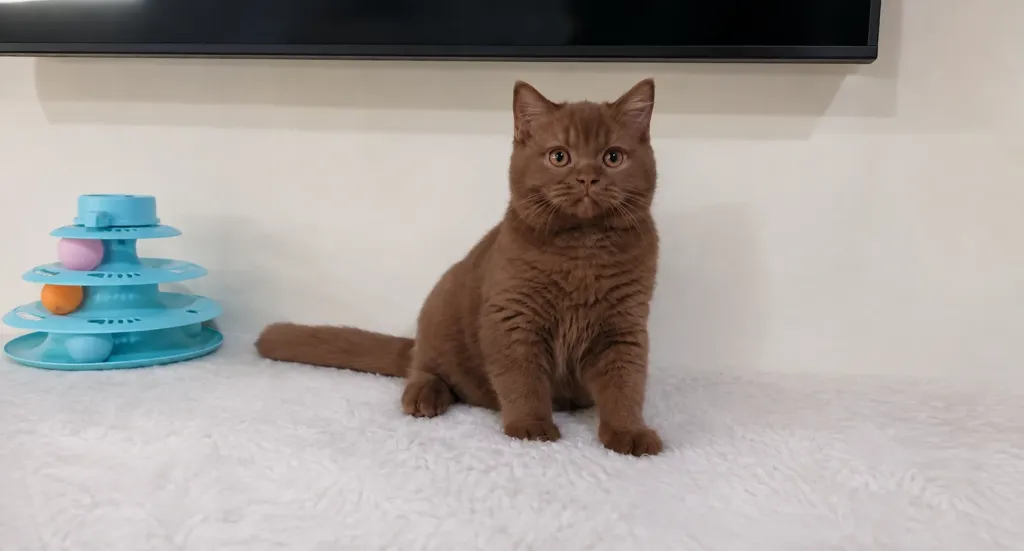
If you’re wondering about British Shorthair personality, expect a calm, quietly devoted companion that does things entirely on its own terms. Most people walk into British Shorthair ownership expecting one of two things: a standoffish cat who merely tolerates them, or a plush lap cat who never leaves their side. The reality is more interesting than either of those. British Shorthairs are remarkably easy to live with, but once you understand how they express loyalty, they become genuinely wonderful companions.
At Kitty Palace Cattery, our TICA-registered cattery in New Jersey, we’ve raised British Shorthairs long enough to know their character tends to win people over slowly, then completely. New owners often tell us it took a few weeks before they fully appreciated what they had. By the end of this article, you’ll know exactly what to expect from this breed at home and whether this personality is the right fit for your household.
British Shorthair Personality: Core Traits That Set This Breed Apart
Calm and steady, not lazy
There’s a meaningful difference between a cat that’s calm and one that’s just checked out. British Shorthairs are firmly the former. They move through a household with a kind of unhurried confidence: not easily rattled by noise, new visitors, or the general chaos of daily life. You’ll find them watching from the windowsill or resting nearby rather than bolting under the bed the moment something changes.
That steadiness makes them a natural fit for apartments, busy homes with multiple people, and environments where life doesn’t follow a perfect quiet script. They’re observant and present. They just don’t react to everything. That’s a feature, not a flaw.
Independent but genuinely loyal
British Shorthairs handle time alone well, which matters a great deal for owners who work full-time or keep irregular hours. Their independence isn’t detachment, though. It’s more accurate to say they’re self-sufficient in the moment but consistently oriented toward you over time. They follow routines, check in on you throughout the day, and settle nearby wherever you happen to be.
They aren’t velcro cats, and they won’t trail behind you demanding attention. But they notice when you’re home and when you’re not. That quiet loyalty is one of the things owners come to appreciate most about the breed.
How British Shorthairs Show Affection (It’s Quieter Than You’d Expect)
Nearby, not necessarily on your lap
One of the most common surprises for new British Shorthair owners is this: the cat sits next to you, not on you. On the couch beside you, on a nearby chair while you work, on the floor near your feet while you watch television. This is not rejection. This is exactly how this breed expresses companionship. Once you recognize it for what it is, it stops feeling like aloofness and starts feeling like company.
Some British Shorthairs do become lap cats, especially as they mature, but proximity preference is the breed’s default setting. Expecting them to behave like a Ragdoll or a Burmese will lead to frustration for both of you.
The subtle signals worth learning
British Shorthairs communicate affection through slow blinks, soft head bumps, gentle body rubs, and quiet purring. They’ll come in for a brief petting session and then move along, which is completely normal. Forcing them to stay for prolonged handling tends to backfire: over time it makes them more reserved, not less.
Owners who learn to read these cues and respond on the cat’s terms consistently report stronger bonds than those who push for lap-cat behavior the breed simply isn’t wired for. Meet them where they are, and they’ll keep showing up.
British Shorthair Personality and Family Life: Kids, Other Cats, and Dogs
With children: patient, but not endlessly so
British Shorthairs are generally tolerant around children, especially older kids who move calmly and handle them gently. One trait that makes them a family-friendly choice is how they handle overwhelm: they typically walk away rather than lash out. For a family home, that tendency to retreat instead of react aggressively is a meaningful distinction from breeds more likely to swipe when they’ve had enough.
Younger children need supervision and clear coaching from adults. No grabbing, no carrying, no chasing. When kids learn to let the cat approach on its own terms, the relationship tends to develop naturally and well. The British Shorthair will warm up; it just needs those early interactions to stay positive.
With other cats and dogs: gradual works best
With other cats, British Shorthairs typically coexist well after a structured, unhurried introduction. Start with scent swapping, then barrier viewing, then move to supervised face-to-face meetings in short sessions. Rushing that process is the main reason introductions go sideways. With dogs, compatibility depends heavily on the dog’s energy level. British Shorthairs hold their own around calm, cat-friendly dogs but tend to withdraw from highly excitable breeds, which is a reasonable response.
Socialization history from the kitten stage plays a significant role in how open a British Shorthair is to other animals. A kitten raised in a home environment with regular handling and exposure to household activity adapts to new companions much more readily than one raised in isolation. That’s one reason early breeder practices matter so much for this breed.
Activity Level and What Daily Life With This Breed Actually Looks Like
Short play sessions over marathon activity
British Shorthairs are low-to-moderate energy cats. They play in focused bursts rather than extended high-intensity sessions, and that’s a realistic expectation to set before bringing one home. Around 15 to 30 minutes of interactive play per day, split across two or three short sessions, is typically all they need. Morning and evening are natural windows, since most cats in this breed are more active at those times anyway.
Wand toys, puzzle feeders, and rolling toy mice work well for their temperament. These activities engage them without overstimulating them. If your cat starts walking away mid-session, that’s a signal to wrap it up.
A natural fit for apartments and busy schedules
Their independence and low vocalization make British Shorthairs one of the best cat breeds for apartment living, precisely because of how calm and quiet they are. They typically don’t pace, rarely yowl when left alone, and generally lack the urge to bolt outside the moment a door opens. For owners in cities or smaller spaces, that combination of British Shorthair behavior traits is hard to beat.
What matters more than activity volume is routine. A predictable daily pattern with a short play window and consistent companionship time keeps a British Shorthair settled and engaged. They don’t need constant entertainment; they need to feel like part of the household’s rhythm.
Does Age or Sex Change a British Shorthair’s Personality?
Kittens vs. mature cats: the personality shift
British Shorthair kittens are more playful and energetic than adults, which surprises some buyers who were expecting that famous calm temperament from day one. The settled, steady character this breed is known for typically solidifies somewhere between three and five years old, which is a notably longer maturity arc than you’ll see in many other breeds. It’s worth knowing before you adopt.
Buyers who want that classic British Shorthair temperament right away may find an adult or older juvenile cat is a better match. That said, a kitten raised in a calm, enriched environment with consistent handling will reliably grow into that temperament. The early weeks set the trajectory.
Male vs. female: small differences, not deal-breakers
Males tend to be slightly more outgoing and people-focused; females are often a bit more reserved and selective about affection. These differences are real but not dramatic, and spaying or neutering narrows the gap considerably by removing hormone-driven behaviors on both sides. A neutered male and a spayed female from good breeding stock often land in very similar personality territory.
Individual temperament and the quality of early socialization consistently predict adult behavior better than sex does. When choosing between a male and female British Shorthair kitten, spend more time evaluating the individual cat and the breeder’s practices than worrying about which sex is “friendlier.”
Finding a British Shorthair Whose Personality Has Been Set Up to Shine
Why the first weeks of a kitten’s life matter so much
A British Shorthair’s gentle character is not purely genetic. It’s shaped by what happens in those earliest weeks: consistent human handling, exposure to normal household sounds, and positive contact with people during the kitten’s sensitive socialization window. Kittens raised in quiet cages with minimal handling often display more fearfulness and reservation than the breed standard suggests, and that gap can be difficult to close once the window has passed.
The breeders who bring out the best of this breed’s temperament are the ones treating socialization as a daily practice rather than an afterthought. That means kittens in the home, not in a cage in a spare room. It means handling them regularly, exposing them to household activity, and ensuring they associate people with calm, positive experiences from the start.
What a reputable breeder looks like in practice
TICA registration is a meaningful structural accountability marker: it ties a breeder to breed standards, ethics codes, and ongoing accountability within the cat fancy community. On its own it doesn’t guarantee quality, but it does confirm the breeder is operating within an established framework with defined expectations rather than without any oversight at all.
At Kitty Palace Cattery, British Shorthair kittens are raised in a family home environment in New Jersey, handled daily from birth, and placed with full health certificates, age-appropriate vaccinations. We work with buyers across New York, New Jersey, Pennsylvania, Connecticut, Maryland, and Massachusetts, and delivery options are available for families who can’t make the trip to us.
When you’re evaluating any breeder, ask directly about socialization practices, where the kittens live day-to-day, and what support is offered after adoption. A breeder with clear, confident answers to those questions is worth the wait for a spot on their list.
Is a British Shorthair Right for You?
British Shorthairs are calm, quietly loyal, and genuinely low-maintenance in the best sense of the word. They adapt well to apartments, busy schedules, families with children, and multi-pet homes, as long as introductions are handled thoughtfully. They won’t perform for you, and they won’t demand constant attention. What they will do is show up consistently, settle nearby, and become a steady presence in your home over time.
This is a breed for owners who want a real companion, not a performance cat. If british shorthair personality, calm, loyal, and low-maintenance, sounds like the right match for your household, Kitty Palace Cattery is a TICA-registered breeder in New Jersey with kittens raised to reflect exactly the temperament this breed is celebrated for. Reach out to learn about available kittens and upcoming litters, and discover firsthand what makes this british shorthair personality so easy to love.
FAQ
British Shorthairs are calm, steady, and quietly devoted: unhurried and not easily rattled by noise or visitors. They’re independent but genuinely loyal, often checking in on you throughout the day rather than demanding constant attention.
Yes — their unflappable nature and observant, low-reactivity behavior make them well suited to apartments and busy homes with multiple people. They tolerate household chaos better than many breeds and prefer to watch or rest nearby rather than hide.
Many British Shorthairs prefer to sit beside you or nearby rather than directly on your lap, which is their typical way of showing companionship. Some do become lap cats as they mature, but expecting Ragdoll- or Burmese-style clinginess can lead to frustration.
They communicate affection through slow blinks, soft head bumps, gentle body rubs, quiet purring, and brief petting sessions. Forcing prolonged handling often backfires; meeting them on their terms strengthens the bond.
British Shorthairs are generally tolerant with children, especially older kids who are calm and gentle, but they’re not endlessly patient and will withdraw if overwhelmed. They also tend to coexist well with other cats and dogs when introductions are handled properly and respect is maintained.
Yes — British Shorthairs handle time alone well because they’re self-sufficient in the moment while remaining consistently oriented toward you over time. They follow routines and will check in when you return, making them a good fit for owners who work full-time.
Learn and respect their subtle signals — slow blinks, head bumps, brief pats — and avoid forcing extended handling. Responding on the cat’s terms and giving consistent, gentle interactions helps these cats warm up slowly and form deep, lasting bonds.