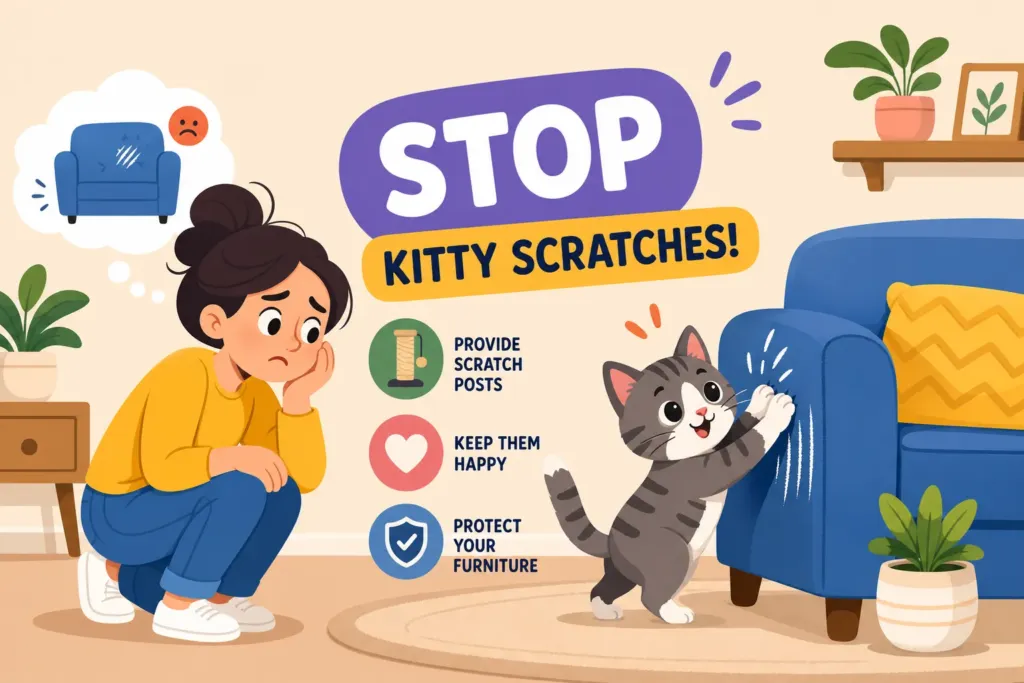
You walk into the living room, coffee in hand, and notice the familiar ridged texture running along the arm of your sofa. The kitten is sitting nearby, looking perfectly satisfied. It’s one of those early moments of new cat ownership that can feel discouraging, but here’s the truth: your kitten isn’t being destructive. She’s doing exactly what every healthy cat is built to do. The good news is that you can stop kitten scratching furniture with the right setup, a consistent routine, and a little patience.
Scratching is hardwired into feline biology, and scolding is usually ineffective, it can actually increase anxiety and make the problem worse. What you can do is redirect that energy, and most kittens catch on faster than owners expect. Kittens raised with early socialization and hands-on handling, like those at Kitty Palace Cattery, often have a natural advantage here because they’re already comfortable being touched and introduced to new environments. That said, any kitten can learn with the right guidance. The sections ahead cover everything from picking a scratching post that actually gets used, to safe nail trims, to knowing when scratching is telling you something more.
Why kittens scratch furniture (and why telling them “no” doesn’t work)
The four instincts driving scratching behavior
Kittens scratch for four distinct reasons, and understanding all of them matters. First, scratching removes the worn outer sheath from the claw, keeping it sharp and healthy. Second, it allows a full-body stretch through the spine and shoulders that feels physically satisfying. Third, it deposits scent from glands in the paw pads, which is how cats mark their space and feel secure in it. Fourth, scratching releases emotional energy during moments of excitement, play, or stress.
This behavior can begin as early as 5 to 8 weeks of age and intensifies as kittens grow. Telling a kitten “no” doesn’t work because there’s no alternative behavior being offered. Punishment creates anxiety without providing a solution, and a more anxious kitten often scratches more, not less. Redirecting to an appropriate surface is consistently more productive than any form of correction.
Why your sofa wins over most scratching posts
Furniture is genuinely appealing from a cat’s perspective. Sofa arms are tall, sturdy, and positioned exactly where your kitten spends the most time, ideal for scent marking. The textured fabric gives real resistance under the claws, which is satisfying in a way that many budget scratching posts simply can’t match. Most cheap posts wobble, stand too short for a full stretch, and use synthetic materials that cat owners and behaviorists consistently report are less preferred than sisal or cardboard. Once you understand why the couch wins, it becomes obvious what a good scratching post needs to offer instead.
How to Stop Kitten Scratching Furniture: Choosing the Right Post
Sisal, cardboard, and carpet: which material works best
Sisal rope and sisal fabric are the materials most recommended by vets and cat behaviorists for scratching posts. They’re durable, rough enough to satisfy the claw-shredding urge, and hold up over time. For younger kittens especially, cardboard is often the first favorite: in one study with shelter kittens, researchers found the cats preferred cardboard S-shaped scratchers over rope-covered posts. Carpet-covered posts can work, but they tend to blur the boundary between the post and the actual carpet in your home, which can create confusion during training.
The safest starting point is to offer one vertical sisal post and one flat cardboard scratcher at the same time. Kitten preferences vary, and giving both options early helps you figure out what your specific cat gravitates toward without guessing.
Vertical vs. horizontal: match the post to your kitten’s style
Watch where your kitten scratches now. If she targets sofa arms, chair legs, or curtains, she’s a vertical scratcher, and a tall upright post is the right match. If she goes after rugs or floor-level surfaces, a horizontal scratcher or flat cardboard pad will get far more use. Size matters: the post needs to be tall enough for a full body stretch, which means at least 3 feet for adult-sized cats. The base must be wide enough that the post doesn’t tip when pushed against, because a wobbly post gets abandoned fast.
Placement changes everything
A scratching post tucked in a back hallway rarely gets used. Place posts near the furniture already being scratched, close to sleeping spots, and in the rooms where your kitten spends the most time. The goal is to make the post the most convenient and appealing option in each space. Once your kitten is consistently using a post, you can begin moving it a few inches at a time toward a more convenient location, but don’t rush that transition. Behaviorists recommend shifting slowly to preserve the association your kitten has already built with that spot.
Stop Kitten Scratching Furniture Now: Humane Deterrents That Work
Double-sided tape and furniture shields: the most reliable option
While training builds long-term habits, deterrents protect your furniture during the process. Double-sided tape is the most consistently effective immediate option because cats strongly dislike the sticky sensation on their paws. Pioneer Pet Sticky Paws is widely mentioned in this category by pet product reviewers: it’s transparent, designed for fabric surfaces, and can be removed without leaving residue. Clawguard Furniture Shields are another solid option for protecting corners and sofa arms specifically.
Apply tape to the specific surfaces being targeted, particularly the arms and lower sides of upholstered furniture. One important safety note: tape works as a surface deterrent only. Never apply it directly to a kitten’s paws or fur.
Citrus sprays and pheromone diffusers: what the research actually says
Citrus-based sprays can make specific spots less appealing to cats, but product selection matters. Some formulations contain essential oils that are irritating or unsafe for kittens, so read ingredient lists carefully before using any spray around a young cat. Feliway Classic and Comfort Zone are pheromone-based products that often get grouped into the deterrent category, but they work differently. They mimic the natural facial pheromones cats release when they feel safe and settled, which can reduce stress-driven scratching across the board. They won’t stop a kitten from approaching a specific corner, but they may lower the overall anxiety fueling the behavior.
How to layer deterrents with redirection
The combination that works best in practice is straightforward: apply tape or furniture shields to the surface being scratched, and place a scratching post directly beside it. The tape creates a mild deterrent that nudges your kitten away from the couch, while the nearby post provides an immediately available alternative. Over time, that physical and behavioral pairing teaches the association you’re after, and that’s how you stop kitten scratching furniture for good.
A simple training routine that redirects scratching for good
Catching the moment and redirecting without punishment
When you catch your kitten mid-scratch on furniture, resist the urge to shout or reach for her suddenly. A calm interruption is far more effective: a short clap or a quiet sound to get her attention, followed immediately by guiding her gently to the nearby scratching post. The goal is to interrupt and redirect, not to frighten. Physical corrections and loud scolding create fear and erode trust without teaching the kitten what to do instead.
Positive reinforcement that builds lasting habits
Every time your kitten uses the scratching post on her own, reward it immediately. A small treat or enthusiastic verbal praise within a few seconds of the behavior creates a strong behavioral link. Timing is everything: a reward given 30 seconds later doesn’t reinforce the scratching post, it just confuses the situation. Over several weeks of consistency, the post becomes the preferred option because it reliably predicts something good. Make sure everyone in the household follows the same approach, because inconsistency slows the process significantly.
Why some kittens pick this up faster than others
Kittens that received consistent handling, environmental exploration, and early texture exposure tend to adapt to training routines more easily. They’re already comfortable being touched, which matters when it comes to claw trimming. They’re less reactive to change and more willing to investigate new objects like scratching posts. This is one reason kittens from socialization-focused catteries like Kitty Palace Cattery often settle into new home routines with less friction. The early experiences they receive lay the groundwork that your training then builds on.
Keeping claws trimmed to reduce furniture damage
How often to trim and what tools you need
Nail trimming won’t stop scratching, but it significantly reduces damage during the training period and makes the whole process easier on your furniture. Most kittens benefit from a trim every one to two weeks, since their nails grow quickly. Cat-specific nail clippers in either scissor or guillotine style give clean cuts without splitting the nail. Human nail clippers aren’t recommended because the blade angle increases the risk of cracking the claw rather than cutting cleanly through it.
Safe step-by-step technique to avoid cutting the quick
Choose a calm moment, ideally right after your kitten wakes up from a nap or finishes a meal. Hold the paw gently and press the toe pad to extend the claw, then look for the quick, the pink blood vessel visible through light-colored nails. Clip only the sharp, curved white tip, cutting from top to bottom rather than sideways to avoid splits. If you nick the quick, styptic powder or cornstarch applied with gentle pressure stops minor bleeding quickly. Keep sessions short and reward at the end every time, which builds tolerance over months until trimming becomes routine rather than a struggle.
When scratching signals something more serious
Stress-related scratching vs. normal behavior
Normal kitten scratching follows a predictable pattern: near sleeping spots, in high-traffic rooms, and after waking up or playing. When scratching escalates suddenly, shifts to new surfaces your kitten previously ignored, or is paired with hiding, unusual aggression, or litter box changes, it’s worth paying attention. These combinations often indicate stress or anxiety. Common triggers include a new pet in the home, a move, changes in household routine, or a new person spending significant time in the space.
When to consult a vet or behaviorist
If you’ve applied deterrents, introduced appropriate scratching surfaces, and maintained a consistent routine for four to six weeks without meaningful improvement, schedule a vet visit. Cats sometimes scratch more frequently when a paw, joint, or muscle is causing discomfort, and that possibility is worth ruling out early. If a physical cause is cleared and the pattern looks anxiety-driven, your vet can refer you to a certified cat behaviorist. Addressing the problem early prevents the behavior from becoming deeply ingrained and much harder to shift.
Putting it all together
Scratching is never a discipline problem, it’s a management challenge, and one that responds well to a clear, consistent approach. A well-chosen scratching post placed where your kitten already wants to scratch forms the foundation. Deterrents like furniture tape bridge the gap while training takes hold, and positive reinforcement builds the lasting habit. Regular nail trims keep damage minimal during the process and make the whole routine easier for both of you.
Kittens that arrive in a new home already comfortable with handling, different textures, and environmental variety tend to move through this kind of adjustment more smoothly. If you’re still in the process of choosing a kitten, that early socialization is worth asking about. At Kitty Palace Cattery, every kitten is handled consistently from birth, which gives families a real head start on training and bonding from day one.
With a little patience and the right setup, you can stop kitten scratching furniture within a few weeks. Your sofa will thank you.
FAQ
Kittens scratch for four main, hardwired reasons: to remove the outer sheath from claws, to stretch their spine and shoulders, to deposit scent from paw glands for marking, and to release emotional energy during excitement or stress. This behavior can start as early as 5 to 8 weeks and typically intensifies as they grow.
No — scolding is usually ineffective because it doesn’t give the kitten an alternative and can increase anxiety, which often makes scratching worse. Redirecting the behavior to an appropriate surface is consistently more productive than punishment.
Vets and behaviorists most often recommend durable sisal rope or sisal fabric for vertical posts and cardboard for flat scratchers, since kittens frequently prefer those textures. A safe starting setup is one vertical sisal post plus one flat cardboard scratcher so you can see which your kitten prefers; avoid cheap, wobbly posts and synthetic materials that many cats reject.
Match the post to your kitten’s style by observing where she currently scratches: kittens that target sofa arms, chair legs, or curtains are typically vertical scratchers and benefit from tall upright posts, while kittens that scratch on the floor often prefer horizontal or flat scratchers. Offering both types early makes it easier to find your cat’s preference.
Scratching can begin as early as 5 to 8 weeks of age and usually intensifies as kittens mature. With the right setup, consistent routine, and patient redirection to appropriate surfaces, most kittens learn to use scratchers instead of furniture.
Safe nail trims can reduce the physical damage caused by scratching and are a useful part of an overall prevention strategy. However, trims alone won’t stop scratching — they work best combined with suitable scratch surfaces and redirection.
Yes — kittens raised with early socialization and hands-on handling, such as those from Kitty Palace Cattery, often have an advantage because they’re already comfortable being touched and introduced to new environments. That said, any kitten can learn with consistent guidance, the right scratching options, and patience.