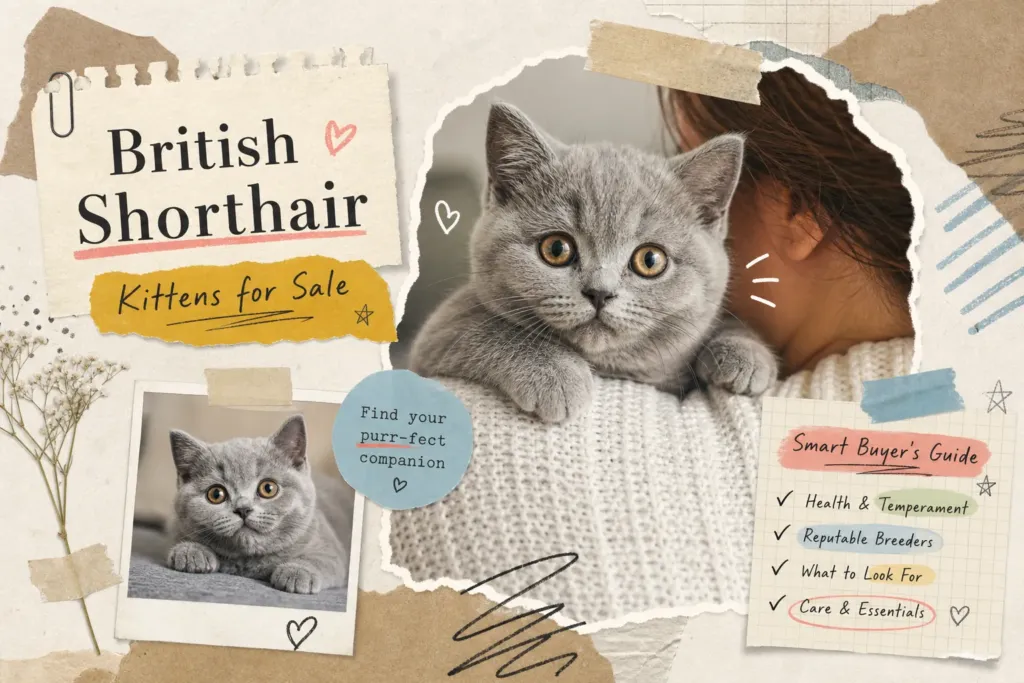
Picture this: you find a stunning blue British Shorthair kitten listed online. The photos are gorgeous, the price looks right, and you send a deposit within the hour. No questions asked about health testing, no request to see registration papers, no inquiry about the buyer contract. It’s an exciting moment, and enthusiasm gets ahead of judgment. Unfortunately, this scenario plays out constantly, and many buyers don’t realize the problem until a vet visit reveals a sick kitten, or the seller disappears entirely.
If you’re actively searching for british shorthair kittens for sale, the U.S. market has plenty of reputable, ethical breeders running professional programs. It also has a meaningful share of sellers who cut corners on health testing, skip proper documentation, and treat kittens as inventory rather than living animals. Knowing how to tell the difference before you commit protects both your investment and the kitten’s wellbeing. This guide walks through what to pay, what paperwork to require, and which warning signs mean you should keep scrolling. Where helpful, we’ll reference Kitty Palace Cattery, a TICA-registered, family-owned cattery based in New Jersey, as a concrete example of what a legitimate operation looks like in practice.
What a truly reputable British Shorthair breeder actually looks like
Most breeder guides and registries recommend TICA (The International Cat Association) or CFA (Cat Fanciers’ Association) registration as the baseline for any serious breeding program, not a nice-to-have bonus, but a meaningful indicator of accountability. These registrations mean the breeder has agreed to follow a formal code of ethics, maintains documented breeding records, and produces kittens with fully traceable pedigrees. Both registries maintain public breeder directories, so you can verify a cattery’s status independently rather than taking a seller’s word for it.
A legitimate cattery environment looks a specific way. Kittens are raised underfoot in a home setting with daily human contact, not isolated in cages or kept away from people during critical development windows. Both parent cats are available for documentation review, and ideally at least one parent is viewable in person or on a live video call. One reliable indicator of a serious breeder: they ask you questions too. A breeder who asks about your home, your experience with cats, and whether you have kids or other pets is screening for a good match, not just a quick sale.
Kitty Palace Cattery in New Jersey is an example of this standard in the Northeast. As a TICA-registered, family-run cattery specializing in British Shorthair, Scottish Fold, Scottish Straight, and Munchkin kittens, they enforce a formal buyer contract, require indoor-only living. That kind of documented accountability is what separates a professional breeding program from a casual backyard seller.
What TICA and CFA registration actually guarantees
Registration means the cattery has agreed to follow breed standards and ethical breeding codes, and that kittens are produced with documented, verifiable lineage. This isn’t a credential that anyone can self-issue. Buyers can look up any registered cattery directly through the TICA or CFA breeder directory, confirming the name, location, and registration status before even picking up the phone. Buying from an unregistered breeder, by contrast, means you have no way to verify the kitten’s ancestry, no recourse through a registry’s code of ethics, and no ability to register offspring or enter sanctioned shows later.
Why socialization matters more than most buyers expect
British Shorthairs are known for their calm, easy-going temperament, but that temperament is shaped as much by early environment as by genetics. Kittens raised in a home setting with regular human contact, everyday household sounds, and interaction with multiple people grow into the affectionate, adaptable companions the breed is famous for. A kitten raised in isolation or in a cage-heavy environment grows into a very different adult cat, often more anxious and less confident regardless of pedigree.
British Shorthair kittens for sale: typical U.S. prices in 2026
Understanding the current price landscape helps you spot both red flags and fair deals with confidence. In 2026, pet-quality British Shorthair kittens for sale from TICA-registered breeders show considerable variation depending on bloodline, coat color, and region. Some breeder guides report ranges of $1,200 to $3,500 for pet-quality kittens, while listings from established catteries with imported European bloodlines or rare coat colors often run $3,500 to $6,000 or more. Show-quality kittens with stronger conformation push higher still, frequently $5,000 to $8,000 depending on lineage. Unregistered kittens from backyard breeders may appear below $1,500, but the lower price comes with significantly fewer health guarantees and no traceable pedigree.
Pet-quality vs. show-quality: what the difference means for buyers
Most buyers are looking for a companion, not a show ring competitor. Pet-quality simply means the kitten doesn’t meet every single breed standard point for conformation showing, but it’s still a fully pedigreed, health-tested British Shorthair from documented parents. Show-quality kittens are priced at a premium because of stronger structural conformation and the prestige of the bloodline, factors that matter to exhibitors but rarely affect the day-to-day life of a kitten owner.
Why a very low price should raise your guard
A listing advertising a “TICA-registered British Shorthair” at $500 or $600 deserves skepticism before excitement. The realistic cost of running an ethical breeding program, including health testing, quality nutrition, routine vet care, TICA registration fees, and proper socialization, makes rock-bottom pricing economically implausible for a legitimate cattery. Consumer fraud reports and breeder organization alerts consistently flag very low prices as a warning sign for scams or under-resourced breeding operations. When a price is dramatically below market, the missing cost is almost always coming out of the kitten’s health, documentation, or care.
How to bring your new kitten home without surprises
Once you’ve confirmed a reputable breeder and reviewed all the documentation, the logistics of pickup or delivery require the same careful attention. Knowing your options and what to put in writing before paying prevents unpleasant surprises on both sides.
Pickup vs. delivery: what each option actually costs
Local pickup is typically free and lets you see the cattery in person before committing. Ground transport is usually priced at $1 to $2 per mile or on a route basis. Flight nanny service, where a courier accompanies the kitten in-cabin on a commercial flight, typically runs $900 to $1,400 depending on the route. Air cargo to a destination airport generally costs $400 to $625. Kitty Palace Cattery works with buyers across New York, New Jersey, Pennsylvania, Connecticut, Maryland, and Massachusetts, making regional delivery a practical option for Northeast buyers who prefer not to navigate long-distance air shipping.
The 24-48 hour vet visit rule
Regardless of how healthy your new kitten appears at pickup, a vet visit within 24 to 48 hours of arrival is non-negotiable. This protects you if a health issue surfaces quickly and activates the health guarantee if one applies. Keep that vet visit receipt dated and filed with your other kitten documents. It’s the first entry in a health record you’ll be building for years.
Putting it all together before you buy
Bringing home a British Shorthair is a long-term commitment, many cats live well into their teens, so plan on a decade or more of responsibility. The breeder you choose sets the foundation for everything that follows. A TICA-registered cattery with a formal health guarantee, traceable pedigree documentation, and a real buyer contract isn’t more difficult to work with than an unregistered seller. It’s simply more accountable, and that accountability protects both you and the kitten.
For buyers in the Northeast, Kitty Palace Cattery in New Jersey is built around exactly that standard. Their British Shorthair kittens come with full documentation, age-appropriate vaccinations, a health warranty covering hereditary conditions, and a buyer contract focused on the kitten’s long-term wellbeing. Delivery is available across NY, NJ, PA, CT, MD, and MA, so geographic distance doesn’t have to mean settling for less.
Ready to find british shorthair kittens for sale from a breeder you can trust? Browse Kitty Palace Cattery’s current available kittens or join the waiting list for an upcoming litter. Search for TICA-registered British Shorthair breeders in your area, ask the right questions, and take the time to find the right match, it’s the best decision you’ll make for the cat you’re about to bring home.
FAQ
Look for TICA (The International Cat Association) or CFA (Cat Fanciers’ Association) registration, verifiable pedigrees, and documented breeding records. Reputable breeders raise kittens in a home setting with daily human contact, make both parent cats available for review, and will ask you questions to screen for a good match rather than just taking a deposit.
Ask for registration papers and a verifiable pedigree from TICA or CFA, health testing records for the parents. These documents give you traceability, legal recourse under a registry code of ethics, and protect your ability to register or show offspring later.
Yes — both registries are considered the baseline for serious breeding programs because they require adherence to ethical codes and documented records. You can confirm a cattery’s status independently through the registries’ public breeder directories before committing to a purchase.
British Shorthair temperament is shaped significantly by early environment as well as genetics, so kittens raised with regular human contact and household sounds become more affectionate and adaptable. Home-raised socialization during critical development windows produces the calm, easy-going companions buyers expect from the breed.
Yes — both TICA and CFA maintain public breeder directories where you can confirm a cattery’s name, location, and registration status. Verifying registration gives you independent confirmation rather than relying solely on the seller’s claims.
Kitty Palace Cattery is presented as a TICA-registered, family-run operation that enforces a formal buyer contract, requires indoor-only living. Those kinds of documented policies and screening practices distinguish a professional breeding program from a casual seller.